7 Real Estate Agent Must Haves

Real estate agent must havesReal estate is not always an office job. In fact, more often than not, agents find themselves doing business out in the field. Meeting prospective sellers, showing buyers around, organizing marketing and events… a lot of this gets done on the go!
Whether you’re working from your car, a coffee shop, a vacant listing, your vacation destination or somewhere else, here are the seven essentials every real estate agent needs to conduct business from anywhere:
1. Smartphone
Your constant companion, it’s probably by your side when you go to bed at night and when you wake up in the morning. Smartphones are just so darn versatile! Besides helping you call and text clients, your phone enables you to check emails, take photos of listings and even legally sign and deliver documents. How neat is that?
Increase Your Exposure
A mobile-friendly agent website is a must these days. Get your own easy-to-use site in a matter of minutes.

2. Business Cards
In a field where you’re always meeting new people, you’re definitely going to need some business cards. Printed or digital, business cards give contacts a way to remember and get in touch with you. Today’s agents might want to add more than just a name and phone number. How about your Twitter handle? Here are some tips to help you optimize your business cards and stand out from the pack.
3. Mini Office Suite
Find a good old fashioned pencil case and pack the following in your car, laptop case or travel bag: trusty pen, notepad, stapler, white out and tape. You won’t regret it when you are the most prepared agent at any meeting.
All-in-One Office
Manage your websites, leads, drip campaigns and more, all from one spot – a mobile Online Office.

4. Mobile Charger Is anything worse than watching the charge on your phone, laptop or tablet go from 20 to 10 to 5 percent? To prevent a slow and painful technology death from happening at exactly the wrong time, you need a mobile charger. This convenient solar charger is one of our favourites.

5. Change of Shoes
It never fails. If you’re wearing nice shoes, you will be called out to a dusty construction site or asked to look at something in a muddy garden. Keep a pair of tennis shoes in your trunk for exactly these moments so you’re ready for anything.
6. Snacks

Pack some healthy snacks (e.g. fruits, trail mix, protein bars) to stave off hunger on the busiest days. Your clients, coworkers and family will thank you!
7. Paper Towels
When you’re eating in your car, tromping around gardens and showing homes, you’re going to encounter your share of messes. Never underestimate the versatile cleaning power of a roll of paper towels. It’s a genius thing to keep in your car.

Now is time to buy in Nashville’s booming housing market

NASHVILLE, Tenn. Realtors say that more people are relocating to Nashville from expensive cities like New York and California, getting more bang for their buck.They say the time is now to buy because of low interest rates.
A local realtor who is currently hosting tours for million dollar homes in the Annadale Community of Brentwood.
There is no slowing down for Nashville’s housing market anytime soon.
“In an election year, we always pause and say, you know, things will change, taxes may increase or decrease depending on what happens to our government, but really, we see Nashville just prospering and growing and doing so many amazing things !

There is so much commercial business , so many executives coming in, so many high level professionals, so many business opportunities here we see Nashville going strong for quite some time.”
According to a report by Emerging Trends in Real Estate, Nashville ranks among the nation’s top 10 cities for commercial real estate markets.
    

The Importance in Having a Professional Real Estate Agent

Not using a professional real estate agent to save money in your real estate deal may cost you later. Whether you’re buying or selling, you’re negotiating a complex transaction with potential pitfalls that could impact your bottom line. A professional agent can use her knowledge and skills to guide you through the real estate process.

Connections

Real estate agents have connections in the market that benefit buyer and seller. Agents work with many people involved in the real estate transaction process, including loan officers, home inspectors and attorneys. If you have a problem or need a service, your agent has the contacts necessary to help you immediately. For example, if you need a home inspection but can’t find anyone to do the job before the lender’s deadline, your agent may have an inspector she has a relationship with who will help.

Knowledge of Market

Knowledge of the real estate market you’re buying in is invaluable in the home buying or selling process. An agent can give a buyer informed opinions about the home’s future value, the neighborhood amenities and schools and whether the investment is solid. Sellers benefit from an agent’s market knowledge because the agent uses it to market the property to the most interested audience and get the highest price. Proper marketing is crucial. Buyers may be wary of an over-marketed home, while a poorly marketed home may not sell for months.

Negotiation Edge

Buyers and sellers both negotiate the home price. The buyer is looking to get the house at the lowest price, while the seller wants the highest price possible. Agents apply their experience to the price negotiations without actively interfering by providing advice to their party. Your agent can help you evaluate the pros and cons of each offer or counteroffer you receive. An agent helps with the legal paperwork required for offers so your interests remain protected during the negotiations.

Legalities

Buying or selling a home involves a lot of paperwork and is a complex process with different deadlines. Since an agent has experience in real estate transactions, she can use her knowledge to ensure the process goes smoothly and nothing important is missed. If you have any questions about the papers you’re signing, your agent will help you and get the answers if she doesn’t know.

Education and Training

All real estate agents must have a license in the United States. While the exact licensing process varies by state, professional agents must have some specific real estate education and usually have to pass a test to get one. An agent also has knowledge of the specific real estate laws and procedures in the area she’s working in, as some of the required training is location specific.

What Are The Benefits of Using a Property Management Company?

A competent property manager can add significant value to your investment, which is why many seasoned real estate investors will tell you that a good management company is worth their weight in gold. Here are a few ways that a good property manager earns their keep:Higher Quality Tenants
Think of tenant screening as the moat and draw bridge around your castle. It is certainly possible to get a bad tenant out of your home once they are in, but it’s a real hassle and you are so much better off never accepting them in the first place. A thorough screening process results in reliable tenants that:
Pay on time

Rent longer

Put less wear and tear on the unit

Generally cause less problems

An experienced property management company has seen thousands of applications and knows how to quickly dig for the real facts about candidates and analyze that information for warning signs. By allowing a management company to handle the screening, you will also be shielding yourself from rental scams directed at owners, and discrimination lawsuits resulting from an inconsistent screening process. This kind of experience takes time, and insomuch as it means avoiding bad tenants, scams and lawsuits it is arguably one of the most significant benefits a property management company will provide.
Fewer costly and time consuming legal problems

Veteran landlords know it only takes one troublesome tenant to cause significant legal and financial headaches. A good property manager is armed with the knowledge of the latest landlord-tenant laws and will ensure that you are not leaving yourself vulnerable to a potential law suit. Each state and municipality have their own laws, these plus federal law cover a number of areas including but not limited to:
Tenant screening

Safety and property conditions of the property

Evictions

Inspections

Lease addendums

Terminating leases

Handling security deposits

Rent collection

Avoiding a single law suit can more than pay for the property management fees, and spare you time and anguish.
Shorter vacancy cycles

A property manager will help you perform three critical tasks that affect how long it takes to fill your vacancies:
Improve and prepare the property for rent – A property manager will suggest and oversee cosmetic improvements that maximize revenue.

Determine the best rent rate – Too high and you are stuck waiting, to low and you’re losing money every month the tenant is in the unit. Determining the optimal price requires knowledge of the local market, data on recently sold comparables, and access to rental rate tools.

Effectively market your property – An experienced property management company has written hundreds of ads and understands what to say and where advertise in order to get a larger pool of candidates in a shorter period of time. Additionally because of their volume they can usually negotiate cheaper advertising rates both online and offline. Lastly, they are familiar with sales and know how to close when they field calls from prospects and take them on showings.

Better tenant retention

While its easy to see the effects of lost rent, there are other equally serious problems with a high tenant turnover rate. The turnover process involves a thorough cleaning, changing the locks, painting the walls and possibly new carpet or small repairs, not to mention all the effort associated with marketing, showing , screening and settling in a new tenant. This is a time-consuming and expensive process that can often be averted by keeping tenants happy and well cared for.
A good property management company will have a time-tested tenant retention policy that ensures happy tenants with lengthy stays in your properties. These kinds of programs require a consistent, systematic approach, which is where a good property management company will shine.
Tighter rent collection process

The way you handle rent collection and late payments can be the difference between success and failure as a landlord. Collecting rent on time every month is the only way to maintain consistent cash-flow, and your tenants need to understand this is not negotiable. By hiring a property manager, you put a buffer between yourself and the tenant, and allow them to be the bad guy who has to listen to excuses, chase down rent, and when necessary, evict the person living in your property.
If you let them, your tenants will walk all over you. They have to be trained to follow every part of the lease or deal with the consequences. Property managers have an advantage because tenants realize that they, unlike the owner, are only doing their job and are obligated to enforce the lease terms. Many property managers will tell you that it is considerably easier to manage other people’s units rather than their own for this reason.
Regarding evictions, there are strict laws concerning the eviction process, and doing it wrong, or trying to evict a “professional tenant” can be a MAJOR fiasco. A good property management firm knows the law and has a good process for obtaining the best possible outcome given the circumstances. Never having to handle another eviction can be a compelling reason to consider hiring a property management company.
Assistance with taxes

A property management company can help you understand which deductions you can claim, as well as organize the necessary forms and documentation to make those claims. Additionally, the property management fees themselves are also tax deductible.
Lower maintenance and repair costs

Good maintenance and repairs keep tenants happy and preserve the value of your investment which make them a very important part of land-lording. By hiring a management firm you gain access to both their in-house maintenance staff, as well as their network of licensed, bonded and insured contractors who have already been vetted for good pricing and quality work. This can translate into significant savings compared to going through the yellow pages and hiring a handyman yourself. Not only is the firm able to get volume discounts on the work, they also know the contractors and understand maintenance issues such that they are capable of intelligently supervising the work.
Increase the value of the investment

Preventative maintenance is achieved through putting systems in place that catch and deal with maintenance and repair issues early on, before they grow into larger more costly problems. This requires a written maintenance check program, detailed maintenance documentation and regular maintenance visits. The management firm can also offer you suggestions and feedback on upgrades and modifications, both how they will affect the rent you can charge, as well as their impact on maintenance and insurance.
Personal benefits for owners

Less stress – Avoid having to deal with middle of the night emergencies, chasing down rent, evicting people from your property, tenants who wreck your property, rental scams, lousy vendors, piles of paperwork.

More freedom – Live and invest wherever you want with the constraint of needing to be near your properties. Additionally you can live and travel without the requirement of always being available in the event that your tenants have a need you have to tend to. Once you have found a good management company, it doesn’t matter if you live in the same state. Some landlords live in other countries and simply collect their check every month without ever seeing the property.

Free up more of your time – Time is money, and for many investors, their time can be more profitably spent in areas other than servicing their properties. When you focus on asset management you’re working ON your business, when you manage your own properties you work IN it. Additionally you have more time to spend with family or friends doing things you enjoy.

A final thought

Of course, this is an ideal scenario. These results can only be expected if a management company is competent, trustworthy and a good fit for your property. A poor choice of a management company can produce many headaches of its own.
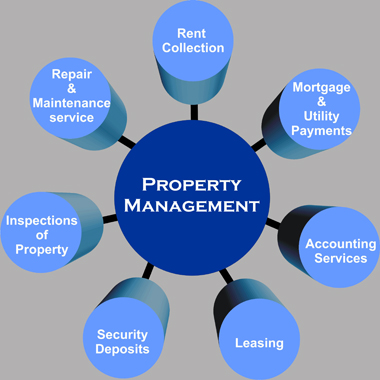
propertymanagement

Brokers Tell All: 6 Ways to Boost House Value

Six ways to Boost House Value
With housing prices increasing, now is the time invest in your home to capitalize on its value. Here’s what veteran real estate professionals from around the country have to say about what home improvement projects pay off, whether you are selling now or in the future.
1. Create Space

Knock out a non-structural wall, or even remove that kitchen island. Anything that opens the space and creates a sense of flow in the house is generating a response from buyers who can afford to be choosy. For the price of a few hundred dollars, you’ll transform the feel of the house. “Right now buyers want a wide open floor plan, the living room right off the kitchen. They are into big spaces.
A kitchen island can be an asset, creating needed storage space. But if the kitchen has enough cabinets, it could pay to haul the island away.Homeowners might want to consider a moveable island. “You can adjust them to you needs.

2. Prune, Limb, and Landscape
Tangled trees and unkempt bushes can obscure views, darken interiors, promote mold, and block a good look at the house.
People forget about their trees more than almost anything, yet landscaping is one of the top three investments that bring the biggest return. According to a 2007 survey of 2,000 brokers conducted by HomeGain, an online real estate marketing site, an investment of around $400 or $500 dollars in landscaping, can bring a return of four times that. “It could really make a significant difference in the price. Nobody likes to spend money, but landscaping might even be the most important thing, even if owners have kept up the house.
Overgrown landscaping is a problem at all price points, it hurts with marketing too. People say, “Where’s the house?” If buyers can’t see what they are getting, they just move right on.

“3. Let in the Light
The number one item on HomeGain survey, lighting—everything from a dimmer switch to the increasingly popular sun tubes—noticeably enhances a home’s appeal. “Dimmers allow you to create a mood.” 
He’s a booster of sun tubes, too. Less expensive than framing in a skylight, sun tubes—also known as light pipes, sunscoops, and tubular skylights—use reflective material to funnel natural light from a globe-capped hole cut in a rooftop down through a ceiling fixture and into a room. With tubular skylights, sunlight is nice, and moonlight is even nicer. Everyone loves the natural light.” 
A few other ways to light things up: Fix broken panes, make sure windows open, and consider lights that use motion detectors to turn themselves off. Remember high wattage bulbs make small spaces feel larger, and soft lighting brings warmth to empty spaces. 
Before thinking about a fancy upgrade to the kitchen, address the basics. Insulate the attic, repair plumbing leaks, replace rusty rain gutters, inspect the furnace and the septic system, replace or repair leaky windows, install storm doors, weed the flower beds. 
These kinds of fixes go a long way toward value. Starting with a couple hundred dollars on a few things could increase the value of your house by a few thousand dollars. People are surprised by that. It’s exciting. People think they have to put in a lot of money to see a big difference and they really don’t.” 
4. Don’t Put Off Care and Maintenance

Investing in maintenance and repairs is not only moneywise; could also be crucial to a sale. Brokers and agents from across the country say the houses that get attention in this buyers market are in tip-top shape. What’s important in this market, houses that sell are in pristine condition and are priced to the market. If your heating or air conditioning systems are old, “new ones are so much better, with savings of up to 30 to 40 percent.

5. What’s Under Your Feet

Don’t undervalue the materials you’re standing on. Ninety-four percent of real estate pros recommend spending some money on floors. But it doesn’t have to be a lot of money. For an estimated average investment of $600 to $900, brokers report that the return in value comes in at up to $2,000. 

And you can spend even less than that. A few well-placed nails can eliminate distracting squeaks. Other small projects with a big impact include repairing broken tile, patching damaged floor boards, and tossing out the wall-to-wall carpeting. 
In some cases, however, a new floor is in order!! The “would-be seller’s ” house might’ve sold were it not for a kitchen floor that drew questions from buyers. “The number one problem was the fact that her floor was really personal: blue and green vinyl. It clashed with the other upgrades in the kitchen. Everyone kept saying, ‘That kitchen!'”
If you want a wood floor that holds value, check out  engineered hardwoods. If you like cork, she says floating cork wears better than cork tile which is glued down and can peel. 
6. Easy Bath Upgrades

Brokers, one and all, say spiffing up the kitchen and bath is a sure bet for adding value to your home. Surveyed brokers say these kinds of improvements can get expensive. It may not be economical to do a major renovation if you are trying to spend as little as possible before putting a house up for sale. But some upgrades are cheap, easy, and fast…especially in the bathroom. 

Replace frosted glass for clear glass, clean the grout, remove rust stains, apply fresh caulk, update doorknobs and cabinet pulls, replace faucets, and install a low-flush toilet. Even buying a new toilet seat can make a difference. You can spend $500 on a bathroom, and it’s totally tuned up. 
Think DIY , small $$ investments , BIG $$$ returns. Neat , clean and spiffy !!! 

How To Prepare Your House For Sale

Prepping and staging a house. Every seller wants her home to sell fast and bring top dollar. Does that sound good to you? Well, it’s not luck that makes that happen. It’s careful planning and knowing how to professionally spruce up your home that will send home buyers scurrying for their checkbooks. Here is how to prep a house and turn it into an irresistible and marketable home.Here’s How:
Disassociate Yourself With Your Home.

Say to yourself, “This is not my home; it is a house — a product to be sold much like a box of cereal on the grocery store shelf.

Make the mental decision to “let go” of your emotions and focus on the fact that soon this house will no longer be yours.

Picture yourself handing over the keys and envelopes containing appliance warranties to the new owners!

Say goodbye to every room.

Don’t look backwards — look toward the future.

De-Personalize.
Pack up those personal photographs and family heirlooms. Buyers can’t see past personal artifacts, and you don’t want them to be distracted. You want buyers to imagine their own photos on the walls, and they can’t do that if yours are there! You don’t want to make any buyer ask, “I wonder what kind of people live in this home?” You want buyers to say, “I can see myself living here.”

De-Clutter!

People collect an amazing quantity of junk. Consider this: if you haven’t used it in over a year, you probably don’t need it.

If you don’t need it, why not donate it or throw it away?

Remove all books from bookcases.

Pack up those knickknacks.

Clean off everything on kitchen counters.

Put essential items used daily in a small box that can be stored in a closet when not in use.

Think of this process as a head-start on the packing you will eventually need to do anyway.

Find Your Niche & And Dare To Risk

With the recent Facebook pie-in-your-face IPO still ringing in our ears, it might be wise to dwell on what constitutes taking the “right risk” for you. Like it or not, risk taking will always be an inesapable part of our everyday lives. Whether you are changing jobs, investing, or beginning a new relationship you will ultimately be confronted with some risk. But here’s the kicker question: How do we know if the risk is right for you?

In a recent interview, Robert Michael Fried, best selling author of Igniting Your True Purpose and Passion, offered “the risk is right when it will help you close the disparity or gap between who you are and where you want to go. When your outside view of the world reflects your inner voice, you are will on your way to taking the right risk.”

Make no mistake about it – it takes courage to take the right risk, but the greatest rewards go to those who take them. So if we don’t take any risks in life, we lessen the risk of getting hurt – but we don’t live life to the fullest either.

As Seneca once pined, “It’s not because things are difficult that we do not dare. It is because we do not dare that things are difficult.”

That being said, Fried offers up 7 jumpstarting steps to take the right risk:

  1. Listen to your heart. Follow your heart, not just your reason. You seldom go wrong when you listen to your own inner voice.
  2. Get out of your comfort zone. Golden opportunities often lie just outside our comfort zone. Have the courage and fortitude to grab that brass ring.
  3. Avoid analysis paralysis. Do your homework, but ultimately you need to take action.
  4. Somehow the biggest risk is not to risk at all. Don’t wait for your ship to come in… row out and meet it.
  5. Don’t wait for the perfect time. There will never be a truly perfect time to act. In life, you generally learn more by doing than waiting. The perfect time to act is now!
  6. Face your fears. Feel the fear and do it anyway. Have the courage to work through your fear and use it to propel your spirit and rekindle your focus.
  7. Live in the present. Make the present the primary focus in your life, not the past or the future. Remember, life is a gift; that’s why they call it a present. The present moment is all you’ll ever have in your life.
  8. Take the leap. Aristotle once said, “Courage is the first of all human qualities because it is the one that guarantees all others.” Have the courage to take the leap and close the gap between your dreams and reality.niche

How to Buy and Sell a Home at the Same Time—Without Losing Your Mind

Ah, to be a first-time home buyer again: How easy it was to buy a home when you weren’t carrying another mortgage on your back!
If you’re looking to graduate from first-timer to repeat buyer, you know things are about to get much trickier. Unless you’re a bona fide house collector, you’ll have to sell your home in order to buy anew—adding a whole separate layer of anxiety to what you already know is a stressful home-buying . 
In an ideal world, you’d buy a new home, move, and then, and when all the dust settles, deal with the turmoil of selling. But for most people, that’s totally unrealistic. Not only does it cost significantly more, since you’ll be paying two mortgages, but sellers might be quick to judge if you’re holding on to your current home. Another words if it’s NOT on the market. 

You can do this! If selling and buying simultaneously is the only way to go, here’s what you need to know to make sure both processes go as smoothly as possible.
Know the market first.
Before you start seriously searching for a new home—or put your current home on the market—make sure you have a solid understanding of the housing market in your area (and the area where you’re planning to buy). Is the market weighted toward buyers or sellers?
Only then will you be able to fully strategize. As is so often the case, the best plan of action may differ depending on exactly who has the power.
That doesn’t mean to find one house you like and call it a day: Find multiple suitable options. That way, you’re less likely to find yourself in trouble if your purchase falls through—your newly sold home won’t leave you stranded.
Similarly, make sure to hire an appraiser and price your old home fairly. Now is decidedly not the time for delusions of grandeur: Two extra months on the market because you couldn’t humble yourself to lower the price means two months you’ll be paying double mortgages. Two very long months…
Plan your schedule carefully…
Should you buy first, then sell—or vice versa? Both have their risks and rewards. Selling first makes getting a mortgage easier, but it also means you’ll need to find a temporary place to live. Buying first means moving will be easier, but it also skews your debt-to-income ratio, making it harder to qualify for a new mortgage—not to mention the difficulty of juggling two monthly house payments.
“It’s like walking a tightrope ! Your finances will be on the highwire, too. When determining whether you should sell or buy first, think beyond “How can I make the move as easy as possible?” Instead ask: “Can I handle two mortgages? What if my home sells for less than its listing?”Whichever option you choose, make sure you’re prepared to accept the consequences: having to store your stuff and rent temporarily, or undergoing the financial burdens of dual mortgages.
… but don’t rely on timing
When buying and selling a home simultaneously, “there are so many external circumstances. “I’ve yet to see it really work smoothly and efficiently.”
Remember: You’re not the only party in this equation. For every seller there’s a buyer, for every buyer a seller. While things might appear to be working smoothly when viewing your master plan from above, that doesn’t take into account the variabilities of other people. 

Closings are rife with delays. Your buyers might have difficulty securing their mortgage; your home inspector may bring up issues that need to be fixed before you can move in.
“You’re relying on the seller of the place that you’re buying to be ready to move in concert with the buyer of your house.
So even if you’ve planned to sell your home first and are prepared to rent while buying, know that even the best-laid plans go awry—and you might end up juggling both mortgages. Preparing yourself for this (however remote) possibility ahead of time will ensure a smooth transition.
Know your financial solutions.
For those who choose to sell first, the process is relatively straightforward other than the additional cost of a rental between homes. However, there is the option of a rent-back agreement, where you negotiate with the lenders and buyers to be able to remain in the property for a maximum of 60 to 90 days—often in exchange for a lower selling price or rent paid to the buyers. This can relieve some of the pressure of finding a new home, giving you additional time to house hunt.
But if you’re buying first, talk to your Realtor about ways to decrease your financial burden and risk. Here are the two most popular options for buyers:
Contract contingency: Buyers can request that their new home purchase be dependent on the successful sale of their old home. If you’re looking in a competitive market, this may not be a good option; however, if the seller of your intended home has had difficulty attracting interest, this may be a good deal for all parties involved—assuming you can convince them that your home will sell quickly.
Bridge loans: 

Bridge financing allows you to own two homes simultaneously if you don’t have deep pockets for a second down payment. This option is especially attractive if you’d planned to sell your home first and use the proceeds to buy the second. It functions as a short-term loan, intended to be repaid upon the sale of your original house.
Don’t let fear rush you!
If your home has sold but you haven’t found a new place to live, don’t let anxiety push you toward a bad decision. Sellers should pre-emptively plan on a short-term rental “so they don’t feel stressed or pushed into something that they would not normally be interested in,” he says. “They shouldn’t make a purchase because they felt like they were pressured from the time constraints.”
Found the perfect home right on schedule? That’s great. But don’t feel like you have to compromise on things that are important to you just because you need to find a home. Conversely, don’t accept a bid that you feel is too low just because your finances are strained by two mortgages. 

If you have a temporary apartment set up, you’re less likely to compromise.Certainly, selling and buying a house simultaneously will be stressful—but carefully considering and planning for the risks and hurdles can mitigate the stress.

Lead Paint: Do You Have It in Your Home?

Lead poisoning is a serious health issue for both children and adults. It can affect anyone, even affect a fetus in the womb, if the mother inhales or ingests lead from paint.
And if you think you can’t come into contact with lead paint, think again. If you live in an older home, your walls, doors, trim work, and handrails may be covered with lead paint. And even if the original paint has been painted over many times, you may still be at risk for lead poisoning. Old paint that chips off can pose a problem, as can dust from lead paint that is sanded down.A Short History of Lead in the Home

Lead is a highly poisonous material, and lead paint is not the only culprit. Before the dangers of lead were fully recognized, however, many commonly used materials like paint and gasoline were made with lead. Lead is everywhere and, unfortunately, you can’t see it or smell it. Lead can be found in:
House paint made or used prior to 1978
Plumbing materials like faucets and pipes in homes

Dirt and soil

Utensils, plates, and other serving ware made from pewter

Some batteries

Paint and art sets for children

Items like fishing sinkers and bullets

Furniture and toys that were painted prior to 1976

Some painted toys and household items that were made in countries other than the United States

Small figurines

Health Problems Caused by Lead Paint

If lead paint chips are ingested or dust from sanding off old layers of paint is inhaled or swallowed, lead poisoning may result. Lead poisoning can cause these symptoms and complications:
Lack of energy
Frequent headaches

Insomnia

Constipation

Abdominal pain (usually from ingesting a large amount of lead)

Moodiness and irritability

Problems paying attention

Behavioral issues

Hearing difficulties

Damage to kidneys

Lower IQ

Delayed physical and mental development

Affected senses

Adults may experience:

Pain in joints and muscles
Concentration and memory deficits

High blood pressure levels

Problems with nerves

Reproductive issues

Know Your Lead Paint Risk

Every home, before it can be bought or sold, must have a lead paint disclosure that states what the owners know about the history of the home and the presence of lead-based paint. You can check the disclosure on your home to see if there is any known history of lead-based paint use in the house.Getting the Lead Paint Out
Paint samples from your home can be tested to determine if they contains lead. Though there are do-it-yourself home tests available, the U.S. Consumer Product Safety Commission (CPSC) recommends lab tests as the most reliable method. If you are concerned that you or your children have been exposed to lead, ask your doctor about blood tests to check for signs.
If tests confirm that there is lead paint in your home, the best thing to do is get rid of it … safely. Here are some ways to address the situation:
Remove lead paint. Professionals can strip or sand away lead paint from your walls, and take care of dust and other lead contaminants that may be left behind. For a very small area, you can do it yourself, but use paint thinner or other wet methods to avoid dust.
Cover up lead paint. Don’t just paint over it — you need to seal in lead paint and its dust and flakes with a special sealer.

Replace trim containing lead paint. If you have a door, windowsill, or other trim pieces that have been painted with lead paint, remove them carefully to avoid creating dust and replace them with lead-free materials.

How to Successfully Buy a Home in a Tight Seller’s Market

If you’ve decided to buy a home this spring ,good luck to you ! Your challenge will be not just finding a home you like, but also beating out all the other home buyers who like it and want to make an offer on it, too.

The number of homes for sale is low nationwide, particularly in the price ranges desired by first-time home buyer’s.. The latest figures from the National Association of Realtors show that that there was only a 4.4-month supply of homes for sale in February, which is lower than the six-month supply that indicates a balanced market. One-quarter of February’s transactions were all-cash sales, according to the NAR, and investors bought 18 percent of the homes that were sold.

“A well-priced home in good condition will usually move very quickly and often have multiple offers.That means that if you want to end up with a nice home, you need to be strategic. Expecting to find the home of your dreams by nonchalantly walking into a few open houses or pursuing some online listing’s is not realistic in this seller’s market.

Finding a good real estate agent who knows when and how to negotiate is crucial in today’s market. While everything is negotiable in real estate, sellers are often less inclined to deal if they have other offers waiting in the wings. Plus, if you’re a buyer,working with an agent usually costs you nothing because the seller pays the full commission.

These days, most would-be buyers come to an agent with a list of homes they’d like to see based on their online research. While that often serves as a solid starting point, a quality agent may find additional options. After buyers have seen a few properties,skilled agents can typically gauge what they’re looking for in a new home and may have other properties lined up. “It’s advisable to listen to your Realtor”.

Here are nine tips to help you get the house you want this spring.

Get your finances in order first. Several months before you intend to start looking, you should get copies of your credit reports. to make sure you’re in a financial position to buy. Shop for mortgage financing before you start looking at houses. “I will not take anybody to see any house unless they have a preapproval letter or proof of funds.

Move quickly once you find the house you want. That often means rushing out to see new homes within hours of them being listed and writing up an offer immediately if you like the house. Things are gone in a matter of hours.. “You really have to move fast.”

Don’t make snap judgments based on listing photos. A house that doesn’t look appealing in photos  could still be a great house. Homes being sold by an estate or homes with tenants inside often yield particularly poor photos. Plus, photos fail to convey the feeling of a home or the floor plan. “Unfortunately, the pictures don’t tell a true story. “You have to be willing to look past some of the pictures.”

Be realistic about the inspection and repairs. The more competitive the market, the less likely a seller will be to make repairs, though some sellers may lower the price if the inspection reveals expensive defects. The purpose of the inspection isn’t to get the seller to repair every small problem but to find out for sure that the house is what you thought it was. “They’re not buying a brand-new home.“What we are looking for are major defects we were not initially able to see in the walkthrough.”

Start with your best offer. A competitive market is not the right environment to negotiate a bargain. You may get only one chance to make an offer, and your offer may be one of several the seller will choose from. “You really need to come in with your highest and best offer. ometimes adds an escalation clause, offering to pay up to a certain amount in cash if the appraisal comes in lower than the purchase price. Another type of escalation clause offers a specified amount above the highest offer received, usually with a cap. Remember that the offer includes not only the price, but also your financing package and other terms such as the closing date and contingencies.

Write a personal letter to the sellers. Some sellers are interested only in how much money their home sale will yield, but others love their home want it to go to a new family that will love it just as much. If you really like a house,include a personal letter and a family photo with your offer. “It doesn’t work for everybody, but I have seen it work for many, many people,” Hebert says.

Make a big earnest money deposit. The expected size of the earnest money deposit, and the rules about when you get it back, vary by locality. But sellers often see a larger deposit as a sign that you’re serious about the deal.

Make a backup offer. Many prospective buyers don’t want to make an offer on a house that has a pending contract. But deals fall apart over inspections, financing and other terms. If you found the perfect house, you can make a backup offer that will put you in first place if the initial buyer walks away.

Consider waiving or shortening contingencies. Most offers are made contingent on the buyer getting a mortgage, the appraisal being equal to the purchase price and the buyer approving the inspection.. Waiving any one of those contingencies can be risky, but may be the right move in some circumstances.You can also beat other offers by shortening the time periods, such as promising to do the inspection or get financing sooner – assuming you can make those things happen. “If you can shorten your contingencies, you can make your offer look better to a seller. “Nobody wants to wait three weeks for a deal to fall apart.”


White clock with words Time to Sell on its face                                                     Hot-sellers-marketimg_2320