Online Presence & Marketing 

Real Estate Marketing is not something you do once. It is something you must do on a continual basis. Think of marketing as the “eating right and exercising” part of your business. Just as you can’t eat an apple or go to the gym once and expect to drop 10 pounds, tone all your muscles and gain energy, you can’t do any marketing activity once and expect incredible results. No matter how good you are at selling real estate, you will only be successful if you can market effectively,too.Are you a real estate agent? Does social media scare you?

Realtors are some of the best marketers in an offline person-to-person environment. You’re incredibly brilliant at getting to know your clients on a very personal level, getting involved in your community, and connecting with your local market.

What you’re not very good at is applying this to your social media.(Well, most of you aren’t!).

The best real estate marketers think of social online like they do social offline!

Social media provides a way to further connect with your local clients and groups and boost your real estate marketing efforts. Social can build trust, and spread your marketing through friends of friends.

But how do you do it? Instead of using Facebook to keep up with the Jone’s. Create a business page. Keep your personal timeline and business page separate. Time is money. Stop wasting time on people and their problems. Start learning how to build your future. You only live once, do your best now !

Learn how to use Facebook to market your real estate listings.

Learn how to use Google Plus and Analytics, Adwords , you tube. One day at a time focus on learning something to improve your business and your pocket $$$.

Most of these sites have video tutorials to show you step by step how to improve your online presence and build your future. 

Remember that business is all about serving others. Clients are the only ones who will put money in your bank account. The more a business focuses on serving them, the more successful it will be. The more people know about you and your skills , the more money you can earn. Dedicating your experience and service’s is rewarding. Eventually your efforts of learning start to pay off. 


A Picture Is Worth A Thousand Words.

When selling a home, the right photography can easily make or break a listing. With the vast majority of real estate searches taking place online and in the comfort of potential buyers’ homes, it is imperative to ensure that your listing features high-resolution, quality photographs that accurately represent the property. It can be a fine line — you certainly don’t want to market the house as much grander than it actually is, particularly if it is a distressed property or if there will be work needed upfront, but you also don’t want potential buyers to bypass the listing because of bad photography.

  • High-resolution.
  • Crisp and clear (with no blurriness).
  • Light and bright (not too dark and not overly exposed).
  • All encompassing (showing as much of a room as possible within the frame).

Professional real estate photographers can get quite pricey, very quickly. However, there are several photo apps available that can do wonders for a standard picture taken with your average digital camera — and may even save you money on professional photography! There are also amazing photo apps , your smart phone & laptop comes equipped with photo editing ! When in doubt of use “you tube” will gladly teach you the know how’s !  Pictures are worth a thousand words.

32465026-Venice-landmark-Burano-island-canal-colorful-houses-church-and-boats-Italy-Long-exposure-photography-Stock-Photo

Marketing and Real Estate Agents

If you’re a seasoned real estate professional, you likely know that your online presence is essential to your success or failure when it comes to generating new leads and clients for your business. So we are going to bypass the typical online marketing tips about having a website, starting a blog, and creating a Facebook page. Instead, we are going to share some more specific strategies that you can use to market yourself and your real estate business. Ones that already assume you have a website, blog, and Facebook page.

1. Use Responsive Web Design

Because of the continued rise of website visitors using mobile devices, the need for a mobile-friendly site becomes more important. This is why responsive web design is a must for your real estate business.

What is responsive web design? It is simply a design that is fluid—as a visitor’s browser size changes, so does the design. This usually means that a site with the basic main column and sidebar design on a desktop will be displayed with the sidebar below the main column of content on a mobile device.

2. Create Local Content

Creating content that is helpful for home buyers and sellers is a must. Both buyers and sellers tend to spend a lot of time researching the buying and selling process, especially if it’s their first time.

In addition to covering the basics, you’ll also want to invest in creating content for the locations you cover. People moving to a new area will be interested in fun facts, statistics, schools, neighborhoods, events, and so forth. If your website offers them content on these topics, they will ultimately be introduced to your services.

3. Capture Emails

Have you heard the term ‘the money is in the list’? It’s become a very popular saying in marketing circles – and how true it is. Creating your own customer database – building it organically through email data capture rather than buying in lists (that are often poor quality and out of date) – is a valuable marketing goldmine and I cannot stress just how important it is in helping to sustain your business.

4. Ask for Reviews

You can’t be shy about asking for reviews, especially ones that could be extremely valuable for your business. Anytime you receive an email or phone call where a client expresses praise for your service, use the opportunity to ask them for a review

responsive web design


Why Pricing A Home for Sale is So Crucial..

Marketing your home gets it to the people. Pricing gets the people to the home !

Selecting the right price is crucial to maximizing your profit with a quicker sales time. Therefore it’s crucial to understand how pricing attracts people and when most buyers will be most open to viewing your home. Check out the charts below to understand the process better.

To Whom Is It Crucial?

It’s important to understand the selling process involves more than just the buyer. It also involves two other very important components:

The Home Inspector: After an offer has been accepted, but before closing, your home will most likely be inspected. Usually, the home inspector will identify and locate deficiencies in your house that may need a price adjustment, based upon the severity and the nature of the deficiency(ies). Pricing a home will need to take into consideration the price of needed repairs.

The Appraiser: Likewise, once there is a binding Purchase and Sale Agreement, your home will be appraised. If you price the house too high, even with an agreement by the buyer to purchase it for the amount, the appraiser many not concur. Therefore the finance company will not approve a mortgage loan for the whole amount. Alternative sources of financing will need to be obtained.

A Little Overpricing Hurts A Lot

Interested buyers

Accurate pricing is crucial. Research shows that if potential buyers perceive your home is overpriced by as little as 5%, half will lose interest. Price your home at 10% higher than the perceived market value, and 6 times the amount will lose interest.

Conversely though, place your home at a 10% discount under the perceived market value, and interest only increases 25%. A significant 15% price reduction will only increase interest by 50%.

When Most Buyers Come

pricing is crucial

Since research shows most quality buyers come within the first 30 days, it’s imperative to price your home accurately from the start. You’ll lose that initial interest of qualified and motivated buyers if you price your house improperly or employ an ineffective marketing plan.

Miss the initial surge of interested buyers within the first 30 days and you become subject to more low ball offers because of a perceived desperation factor.

 Understanding how buyers buy, what attracts them and when they will come. Marketing your home gets it to the people. Getting people to the home is pricing !

BUYING LAND 

BUYING LAND
In this section, you’ll learn how to evaluate a piece of land, estimate the real development costs, and avoid common legal pitfalls when purchasing. We’ll also cover the basics of wells, and septic systems, and other site development issues you should understand before purchasing vacant land.

GETTING STARTED
Once you have a preliminary house design and budget in mind, your next step toward creating your new home is often to find the right piece of land. With vacant, undeveloped there are a host of other issues that affect the cost of development, and what can and cannot be built. Often the biggest surprise is the site development costs, which can be jaw-dropping read more

LAND BUYING CHECKLIST

Use this general checklist when evaluating a piece of land. A quick run through the checklist may remind you of questions to ask the seller, agent, lawyer, title company, town officials, or outside experts, if necessary. It will also help you remember budget items that are often left out. read more

IS IT BUILDABLE
?
It is notillegal to sell an unbuildable lot – or a lot not suited to your use. For example, the lot may be approved for a two-bedroom home and you may want to build four bedrooms. First and foremost, you need to determine if the lot you are considering can be used as you envision. The laws about what can and cannot be built on a piece of land vary enormously from area to area. read more

ZONING

Local governments establish zoning ordinances in order to regulate land use in accordance with goals set by the local planning board. The goal of land use planning is to promote a livable, and economically viable community, balancing the needs of homeowners, businesses, agriculture, recreation, and other community priorities. A title search can establish who owns a property, but will not tell you anything about its zoning status read more

SEPTIC SYSTEMS

For city folks, water magically appears at the tap and wastewater just as easily flows off to somewhere far away. In rural and semi-rural areas, however, there’s a good chance that you’ll need to handle one or both of these vital functions literally in your own backyard. Problems with either the well or septic systems can pose serious health risks and lead to big repair bills. It becomes the homeowner’s job to ensure that there is an adequate supply of clean drinking water and a well-functioning septic system read more

WATER WELLS

The lot you are considering may already have a well drilled, may have a shared well with one or more neighboring lots, or no proven water source at all. Wells can vary a great deal in depth required, flow rate, and water quality. Before buying a lot with a well in place, you should get the reported flow rate in writing and an up-to-date water quality report readily available from most municipal health departments read more

SITE PREPARATION

A piece of land that looks gorgeous to the buyer’s eye may look like trouble to an experienced builder. Issues such as soil type, the presence of ledge, high water tables, and poor drainage are just some of the issues that can complicate construction and drive up costs read more

SITE DESIGN ISSUES

What is the perfect building site for you is highly subjective. Some like windswept mountain tops with dramatic views, others like shady hollows. Some like open fields, others mature woods. Ideally, a house should be designed to fit the building site – or a building site found that is a perfect fit for the house design you have in mind read more

QUESTIONS TO ASK

In looking at land, there are many questions to answer before making an offer. Start with the most important questions (Can I build on the lot and use the lot as planned?) so you can quickly weed out parcels that will not meet your needs. If you are working with a real estate agent, start with him or her. However, important questions should also be put to the proper authority or professional – such as town officials regarding permits, setbacks, zoning rules, and on-site sewage. Do your research prior to making any offer ! 


How do Mortgage’s work anyway ? Simply Put…

Your mortgage is made up of the capital – the amount you’ve borrowed – and the interest charged on the loan. With most mortgages you pay off the capital and interest monthly over 25 or 30 years, which is why they’re called repayment mortgages.

Buying a home is the embodiment of the American dream. However, that wasn’t always the case: In fact, before the 1930s, only four in 10 American families owned their own home. That’s because very few people had enough cash to buy a home in one lump sum. And until the 1930s, there was no such thing as a bank loan specifically designed to purchase a home, something we now know as a mortgage.

Simply put, every month you pay back a portion of the principal (the amount you’ve borrowed) plus the interest accrued for the month. Your lender will use an amortizationformula to create a payment schedule that breaks down each payment into paying off principal and interest. The length or life of your loan also determines how much you’ll pay each month.

Stretching out payments over more years (up to 30) will generally result in lower monthly payments. The longer you take to pay off your mortgage, the higher the overall purchase cost for your home will be because you’ll be paying interest for a longer time period. In the beginning of the loan, the principal gets paid off slowly as most of the payment is applied toward paying interest. Toward the end of your loan, very little of the payment will be applied toward interest, and most of it will go toward paying the principal down. Online, you can use an amortization calculator to get an understanding of how interest is more expensive at the beginning of a loan.

In simple terms, a mortgage is a loan in which your house functions as the collateral. The bank or mortgage lender loans you a large chunk of money (typically 80 percent of the price of the home), which you must pay back — with interest — over a set period of time. If you fail to pay back the loan, the lender can take your home through a legal process known as foreclosure.Moneylender-Loans

House Flipping

House flipping is when real estate investors buy homes, usually at auction, and then resell them at a profit months down the road. Can you make money doing this? Yes. Can you make a lot of money doing this? Yes.
1. Familiarize yourself with how to buy a home or condo. If you’ve already done that, then you already know the process and it’s second nature. If you have not ever purchased a home, then consult with a realtor and a financial adviser. There are a few steps involved when purchasing a home so you need understand that process, such as: placing an offer, getting a mortgage, removing conditions and taking possession.
Placing an offer: Since verbal offers don’t constitute a legally enforceable sale, you need to draft a written offer and give it to the owners and/or realtor. The offer stipulates price as well as the terms and conditions of the sale. If the offer is accepted, the offer becomes a legally-binding sales contract.

Getting a mortgage: Unless you have heaps of cash handy, you’ll need a mortgage. There are dozens of kinds of loans out there, so examine the ones that might work for you and talk to a mortgage broker if you have any questions. Some mortgages (ARMs) have special “teaser” interest rates that stay low in the beginning and raise up significantly after a certain period of time.[1] These might be attractive if you plan on selling the home quickly.

Removing the conditions: This is usually what the buyer does once the seller has accepted their offer.It is a legal move that the buyer (usually) makes in order to communicate that any obligations entered into by both or either parties have been met.

2. Understand the risks of flipping a home. Flipping a home can be risky. You’re incurring a large amount of debt for a potential payoff in the future. Except sometimes, that payoff doesn’t materialize, or it doesn’t materialize as quickly as we might have liked. You could be sitting on a property for longer than expected, paying a mortgage, property taxes, and continual upkeep. Sometimes, you will need to sell a home for less than you bought it for. Often, you’re at the mercy of a quivering housing market.
The amount of physical effort required is also a potential risk. How fit are you and how willing are you to do a lot of the DIY work involved in flipping the house? If you’ve never done renovations or fixes before, it will be a steep learning curve and the less you know, the longer it’ll take to flip the house.

3.Educate yourself about the real estate market in which you’re investing. Read magazines such as Forbes, Entrepreneur, and Money; these often have articles about real estate. Begin to understand how the real estate market works, what constitutes a good and a bad deal, and how to anticipate future growth or contraction in the future.
The housing market is like the stock market. It has both bull cycles (meaning optimism, growth, and high demand) and bear cycles (meaning pessimism, contraction, and low demand). The difference is that the housing market can take many more years than the stock market to switch from one cycle to another.
After talking to at least three realtors and doing some investigation, if you find that the market is in low demand and everyone and their dog seems to be trying to liquidate homes, housing prices are going to fall and profit margins will fall with them. These kinds of market conditions would make it more challenging to flip a home.

Try to wait for a bull market. Wait to buy until the real estate market has turned back around and more people are trying to buy than sell. This will create better conditions for you to start flipping.

4.Look for a home that can be substantially improved with the least amount of time and resources. You’re not trying to live in this house; you’re trying to buy it, improve it, and sell it. Try not to get attached to the home. Instead, view it purely as a profit-making exercise.
A home with room for improvement might have a run-down yard, an old carpet, a good spot for a carport, or other things that can be fixed with a little money and some hard labor. These types of fixes often provide an excellent return on investment (ROI) when flipping a home.

Some people look for distressed properties. Those are ones that the seller is “desperate to sell” for reasons such as: divorce, bankruptcy, death, poor condition of the property, late on payments or other. These give the buyer an inherent advantage over the seller.

Look for homes that sell in the middle to upper range. What that means is the amount where the average family would be able to afford it. Generally that means between about $200,000, and $500,000 depending on your area. You want that price range because these tend to sell the fastest — you have the largest population density looking for these mid range homes. It could be much less or much more but that’s about the average. The home generally have 3 or more bedrooms and at least 2 full bathrooms.

Find out what is preferred by residents in the area you’re looking to buy into. Simple things like easy access, off-street parking, no-through roads and a quiet neighborhood can make or break the attractiveness of a property.

5.Obtain a loan for at least several thousand dollars more than the price of the property you wish to flip. You’ll need this money for repairs and improvements. Negotiate a purchase of the property and buy. In the offer, be sure to have multiple ways out of the contract. The most common method is to simply put “subject to financing by [such and such] date.” If you can’t make the financing by then, ask for an extension on the condition date.
  

6 Reasons You Should Never Buy or Sell a Home Without an Agent 

It’s a slow Sunday morning. You’ve just brewed your Nespresso and popped open your laptop to check out the latest home listings before you hit the road for a day of open houses.You’re DIYing this real estate thing, and you think you’re doing pretty well—after all, any info you might need is at your fingertips online, right? That and your own sterling judgment.
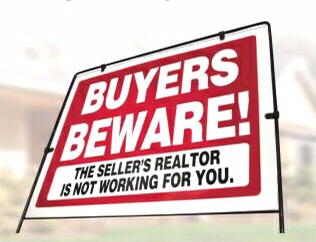
Oh, dear home buyer (or seller!)—we know you can do it on your own. But you really, really shouldn’t. This is likely the biggest financial decision of your entire life, and you need a Realtor® if you want to do it right. Here’s why.
1. They have loads of expertise

Want to check the MLS for a 4B/2B with an EIK and a W/D? Real estate has its own language, full of acronyms and semi-arcane jargon, and your Realtor is trained to speak that language fluently.
Plus, buying or selling a home usually requires dozens of forms, reports, disclosures, and other technical documents. Realtors have the expertise to help you prepare a killer deal—while avoiding delays or costly mistakes that can seriously mess you up.
2. They have turbocharged searching power

The Internet is awesome. You can find almost anything—anything! And with online real estate listing sites such as yours truly, you can find up-to-date home listings on your own, any time you want. But guess what? Realtors have access to even more listings. Sometimes properties are available but not actively advertised. A Realtor can help you find those hidden gems.
Plus, a good local Realtor is going to know the search area way better than you ever could. Have your eye on a particular neighborhood, but it’s just out of your price range? Your Realtor is equipped to know the ins and outs of every neighborhood, so she can direct you toward a home in your price range that you may have overlooked.

3. They have bullish negotiating chops

Any time you buy or sell a home, you’re going to encounter negotiations—and as today’s housing market heats up, those negotiations are more likely than ever to get a little heated
You can expect lots of competition, cutthroat tactics, all-cash offers, and bidding wars. Don’t you want a savvy and professional negotiator on your side to seal the best deal for you?

And it’s not just about how much money you end up spending or netting. A Realtor will help draw up a purchase agreement that allows enough time for inspections, contingencies, and anything else that’s crucial to your particular needs.
4. They’re connected to everyone

Realtors might not know everything, but they make it their mission to know just about everyone who can possibly help in the process of buying or selling a home. Mortgage brokers, real estate attorneys, home inspectors, home stagers, interior designers—the list goes on—and they’re all in your Realtor’s network. Use them.
5. They adhere to a strict code of ethics

Not every real estate agent is a Realtor, who is a licensed real estate salesperson who belongs to the National Association of Realtors®, the largest trade group in the country.
What difference does it make? Realtors are held to a higher ethical standard than licensed agents and must adhere to a Code of Ethics.
6. They’re your sage parent/data analyst/therapist—all rolled into one

The thing about Realtors: They wear a lot of different hats. Sure, they’re salespeople, but they actually do a whole heck of a lot to earn their commission. They’re constantly driving around, checking out listings for you. They spend their own money on marketing your home (if you’re selling). They’re researching comps to make sure you’re getting the best deal.
And, of course, they’re working for you at nearly all hours of the day and night—whether you need more info on a home or just someone to talk to in order to feel at ease with the offer you just put in. This is the biggest financial (and possibly emotional) decision of your life, and guiding you through it isn’t a responsibility Realtors take lightly


How important is Home Staging ? 4 Tips to get it Right!

Home Staging 

Home staging is the act of preparing a private residence for sale in the real estate marketplace. The goal of staging is to make a home appealing to the highest number of potential buyers, thereby selling a property more swiftly and for more money. Staging techniques focus on improving a property’s appeal by transforming it into a welcoming, attractive product that anyone might want.

Bye, Bye Clutter

The most important thing you can do to prepare your home for sale is to get rid of clutter. Make a house rule that for every new item that comes in, an old one has to leave. One of the major contributors to a cluttered look is having too much furniture. When professional stagers descend on a home being prepped for market, they often whisk away as much as half the owner’s furnishings, and the house looks much bigger for it. You don’t have to whittle that drastically, but take a hard look at what you have and ask yourself what you can live without.

Furniture Groupings
There’s a common belief that rooms will feel larger and be easier to use if all the furniture is pushed against the walls, but that isn’t the case. Instead, furnish your space by floating furniture away from walls. Reposition sofas and chairs into cozy conversational groups, and place pieces so that the traffic flow in a room is obvious. Not only will this make the space more user-friendly, but it will open up the room and make it seem larger.

Home Lighting

One of the things that make staged homes look so warm and welcoming is great lighting. As it turns out, many of our homes are improperly lighted. To remedy the problem, increase the wattage in your lamps and fixtures. Aim for a total of 100 watts for each 50 square feet. Don’t depend on just one or two fixtures per room, either. Make sure you have three types of lighting: ambient (general or overhead), task (pendant, under-cabinet or reading) and accent (table and wall).

Neutral and Appealing

Painting a living room a fresh neutral color helps tone down any dated finishes in the space. Even if you were weaned on off-white walls, take a chance and test a quart of paint in a warm, neutral hue. These days, the definition of neutral extends way beyond beige, from warm tans and honeys to soft blue-greens. As for bold wall colors, they have a way of reducing offers, so go with neutrals in large spaces.  

3 Tips For First Time Home Buyers

Credit Score-The homebuyer’s credit score is among the most important factors when it comes to qualifying for a loan these days.

Evaluate Assets and Liabilities –So you don’t owe too much money and your payments are up to date. But how do you spend your money? Do you have piles of money left over every month, or are you on a shoestring budget?

A first-time homebuyer should have a good idea of what is owed and what is coming in.

Organize Documents –When applying for mortgages, homebuyers must document income and taxes.

 Typically, mortgage lenders will request 2 recent pay stubs, the previous 2 years’ W-2s, tax returns and the past 2 months of bank statements — every page, even the blank ones.